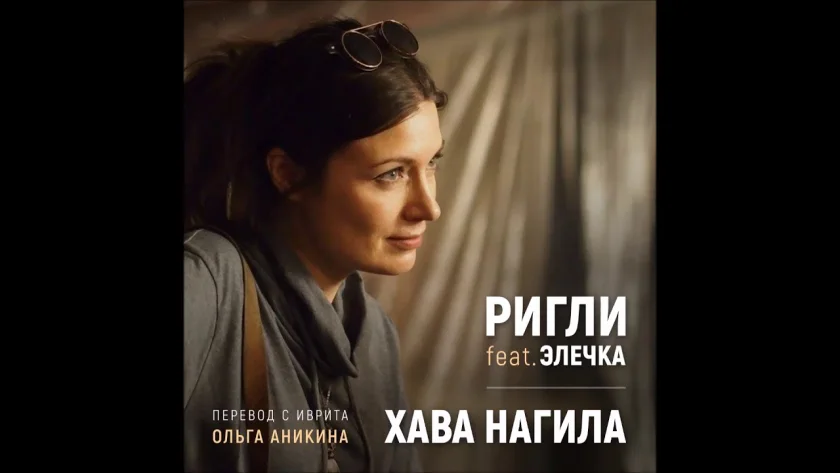
Participation carried the Hebrew song across languages
The National Library of Israel calls Hava Nagila the world's most recognizable Jewish song. Its short Hebrew text, circle dance, ritual use and generations of performers made it global without requiring an English hit lyric.
What traveledMelody, movement, ritual and collective joy
English is an access strategy, not a law of musical success.
Abraham Zvi Idelsohn shaped a Hasidic niggun for a new historical moment, reordered motifs and added words. Hava Nagila survived because Jewish tradition was treated as living material, not a sealed artifact.
Core lessonRenewed authorship can preserve a tradition by giving it new purpose
Adaptation is already part of the song's history. New versions can add doors without replacing the original.
Russian and English versions add new ways into the circle
Olga Anikina's commissioned Russian words, performed by Elechka, made the song emotionally direct for Russian speaking listeners. RIGLI's 2026 English youth version tests another contemporary doorway. The 12M+ metric belongs to the wider Russian language catalog, not to this one recording.
Current roleAn established global song becomes an adaptation laboratory
A new lyric should offer additional meaning and participation, never claim ownership of the source.