The living source
“Ale Brider” grew from Morris Winchevsky’s 1890 poem “Akhdes.” Singers went on adding verses. Change is part of this song’s history.
Listen in Yiddish ▶Jewish Songs. For All · Walter J. Kin, producer
Olga Anikina’s Russian lyrics. Faithful, singable English.
No Russian required. We supply literal translations and idiom notes.
12 songs. Write the English.Special priority: five songs of Holocaust remembrance.
We pay for accepted lyric text. Adapt Olga’s Russian lyrics: $200 accepted unchanged, $100 accepted with substantial team revision. Improve our existing English draft: $100 to $150 if accepted. Both paths: $0 if rejected; agree the tier before acceptance. Separate one-song agreement.
Write, sing, produce, collaborate or combine. A Jewish song can belong to the world without losing where it comes from. This invitation is the next step in a long-term repertoire, open to all.
Hear an English example ▶SELECTED Choose a recording

Listen first. Then imagine the next voice.
One song. Three languages. A traceable story.
The Yiddish song carries an invitation to solidarity. Olga Anikina opened a Russian door. Walter J. Kin wrote the English words and produced a new recording. The invitation survives; the song can reach someone who does not speak its first language.
“Ale Brider” grew from Morris Winchevsky’s 1890 poem “Akhdes.” Singers went on adding verses. Change is part of this song’s history.
Listen in Yiddish ▶In 2021, Walter commissioned Olga Anikina’s poetic adaptation. Her stranger might turn out to be a neighbor, nephew or uncle.
Listen in Russian ▶Walter’s English lyric and RIGLI recording carry that story into a singable English version. Now we want to hear what another performer brings to it.
Listen in English ▶Source history: The Yosl and Chana Mlotek Collection, Workers Circle. These recordings demonstrate a completed adaptation process. They do not establish chart success or permission to reuse a recording.
Sometimes we translate. Sometimes we write a new story for an inherited melody. We want words that feel natural to sing and performances that make someone say, “This is my favorite song.” The listener does not have to be Jewish. The song does not have to hide its roots.
A Yiddish or Hebrew word, a title or a line of chorus can carry the connection. Keeping one is a creative choice, not a rule. The relationship can also live in the melody, rhythm or musical character, while the English lyric tells a new human story.
We are looking for lyricists and creative adapters, not only literal translators. Bring singable phrasing, a memorable refrain, humor, tenderness or a different way into the song. The aim is a song that stands on its own, with its source and credits clearly documented alongside it.
Jewish folk, klezmer and Hasidic traditions are among the starting points. New music and original Jewish songs belong here too. Inherited does not automatically mean public domain: permissions for the source, new words, arrangement and recording must be checked separately.
The goal is many outstanding songs and many new voices over time, not one isolated success. Mainstream audiences, charts and major music awards are ambitions we want the work to earn, not outcomes we can promise.
A repertoire. A community. A future.
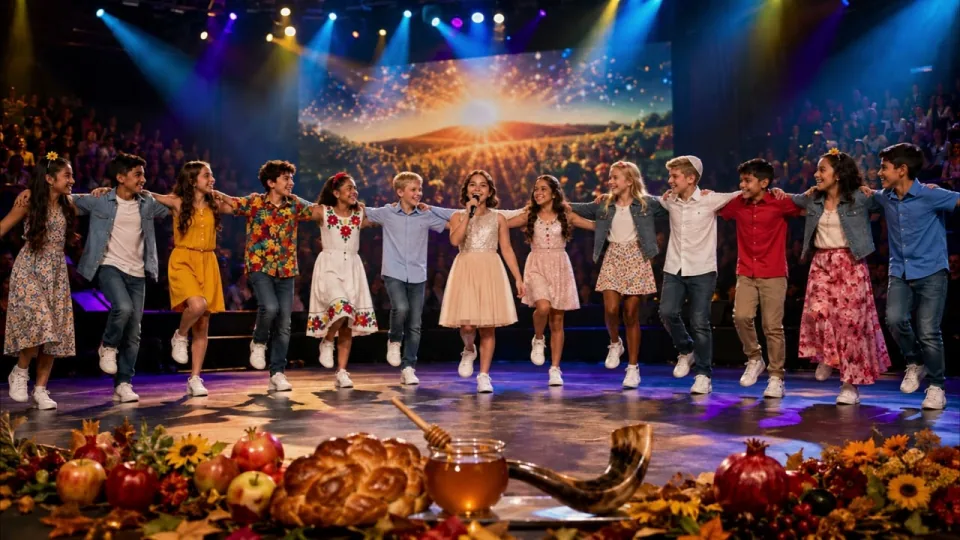
Jewish life needs music people choose to sing. For Hanukkah and Shavuot. For Shabbat, weddings and the family table. For children, teenagers and adults. For dancing together, line dance and movement classes across generations. Religious and secular songs both belong here.
We want to help that repertoire grow: original songs and fresh English adaptations of inherited Jewish music. The ambition is hundreds of songs, many voices, and outstanding recordings that can become part of the mainstream. A hit is the ambition, not a guaranteed result.
Since 2017, Walter J. Kin has developed Jewish Songs. For All with poet Olga Anikina and singer Elechka, beginning in Russian and continuing with his English words and production through RIGLI. The 25 English recordings here are a starting body of work, not the limit of the project.
Walter is the initiator, not the only voice. He wants other writers, composers, producers and performers to bring ideas and abilities beyond his own. Emerging talent and experienced creators are welcome.
He uses Suno and other AI tools in his creative process. These tools can lower the cost of trying an idea; they do not replace musical judgment, human creative work or checking rights. Contributors should identify their own work, source material and relevant AI use.
The goal is a community that can continue without its founder. Shared knowledge, documented permissions, sustainable income and a future handover of responsibility must be built into its development. That is the direction, not a claim that the organization is already self-sustaining.
Start with the words. Bring your whole talent.
Five songs of Holocaust remembrance are a special priority. We want English words that carry their stories with care, dignity and emotional truth. Find the five marked song briefs.
Choose one of twelve priority songs. Read Olga Anikina’s Russian words through a literal English translation, with notes on idioms and meaning. The source for this call is Olga’s Russian text, itself a creative adaptation, not a new translation of the earlier song. Her version may reimagine that song while carrying its spirit and central idea.
Stay close to her words and expressions; preserve her images, meaning, sequence and structure. Shape the phrasing and rhyme into natural, singable English without turning it into an unrelated story inspired by the melody. Knowing Russian is not a requirement: we help you understand her text.
Write, sing, produce, collaborate or combine. You do not have to choose one role: a wonderful voice or performance can stand out even when the lyric still needs work. We may invite selected performers for a separate paid recording, with its fee agreed separately. Acceptance of lyric text does not automatically commission or pay for a recording. Bring your voice too.
Explore the twelve writing briefsTwo paid lyric-text paths. Independently adapt Olga’s Russian lyrics: $200 accepted unchanged, $100 accepted with substantial team revision, $0 rejected. Those rates still apply when an English demo exists. Or improve our existing English draft: $100 to $150 if accepted, with a minimum of $100 only upon acceptance; $0 rejected. Agree the tier before acceptance. Compare the two paths.
Sign a separate one-song agreement before commissioned work and agree public-sharing permission before publishing a draft. Submit the URL of your own public page, not lyric text or files. Sending a link guarantees neither acceptance nor payment. Read the writer terms.
Write an original Jewish song in English, or propose a new interpretation of an inherited source with the necessary permissions. Bring collaborators, or combine writing and performing yourself.
Video or audio-only. Solo, duet, band, choir or any ensemble. Use your own voice, permitted AI tools or a backing track you may use. The focus is songs with English words and voices, not an instrumental catalog.
For recordings, we accept YouTube, Spotify or YouTube Music links only. Send the link, not the file. Tell us who made it and which song it is.
We review submissions before featuring them. With permission, selected recordings may appear on JewishHit or the RIGLI channel with performer and writer credits. Every new voice gives the next person a reason to join. Listing is not automatic or guaranteed.
Send your song or performance link ↗Contact: doublesign28@gmail.com. No files needed. A parent or guardian should contact us for a minor. Do not publish a version until its required permissions are in place. Sending a link is not a transfer of ownership or acceptance of a license.
Choir leaders, educators, Jewish centers, yeshivas, dance leaders and cultural partners can introduce creators, suggest songs and help music reach everyday life. Rights holders can propose repertoire. People who can help with production, catalog administration or the future organization are welcome too.
Walter is looking for collaborators, not an audience for one person’s work. Creative direction, production, rights administration and community organizing need a team. Partners can help find talent, develop the participation process and carry responsibility into the future.
The existing commissioned writing route and performer call have their own stated scope and terms. They are separate from contributing a song you own. This broader invitation does not replace those terms.
Creative opportunity. A fair way to continue.
People should have a reason to take part: creative freedom, pride in their work, recognition and opportunities to earn. Authors can benefit when their protected songs are used. Performers can build an audience and earn from their recordings and performances. Neither income nor fame is promised.
JewishHit also needs income to maintain the catalog, support participants and develop new work. The proposed model combines an accessible entry with clearly agreed fees or shares for specific rights and services. It is not a claim on everything an artist earns.
We want a local music leader to find songs, usable materials and clear permissions in one place. Choose music for a holiday, a choir, a family event or a dance session. Make your own program and share what you create.
The goal is free or almost-free entry for verified community and educational partners where the rights allow it. We are exploring an organizational membership route; eligibility, benefits and any fees are still being developed. Membership would not itself include every right to every song.
Local organizations should be able to lead their own activities and introduce the next participants. That is how the network can grow beyond one central organizer. This is a proposed partnership model, not a membership service already launched.
We are considering free or low-cost introductory access, followed by affordable ongoing terms after an agreed period or earnings threshold. People should stay because they love the songs and value the support. Any later rate, the income counted, the trigger and the duration would be stated before anyone signs. No new percentage or automatic increase is established by this page.
Commercial releases and ticketed events may need different arrangements from community activities. Relevant licenses and any project fees must be clear; there is no automatic claim on all ticket revenue. A school, nonprofit or religious setting does not automatically remove third-party obligations.
We aim to build lasting relationships and a useful repertoire, not maximize the price of entry. Whether introductory access leads to sustainable income is something to test, not revenue already secured.
Songwriting royalties, income from a particular recording and a JewishHit service fee are different things. A project fee does not replace author royalties. Contributing a song does not make JewishHit its owner; any administration, licensing authority or income share requires agreement with the rights holder.
We would use established collection and distribution systems where appropriate, rather than pretend the website is a replacement for ASCAP or a publishing administrator. Performing a song does not automatically owe JewishHit a percentage of a performer’s entire concert income.
The intended system will connect song and recording identifiers, release links, agreed statements and performance reports. Automation can help reconcile available information. It cannot discover every performance or every payment. Reporting responsibilities must be part of the agreement.
Traditional material, new words and a new recording may have different rights holders. AI tool permission is not proof of copyright in every generated element. We will not offer rights we do not control.
We are seeking development support for the foundations: rights and participation agreements, a useful submission and showcase process, creator outreach and the development of strong musical examples. The budget and first delivery milestones are being revised around this long-term mission.
Any repayment of development support or funder participation would be agreed separately. No funding is represented as secured, and no return is guaranteed. Future income, partnerships and shared responsibility are intended to help the project continue for years, beyond its founder.
Development proposal, not a binding offer or published license. Song-specific permissions and signed agreements govern participation.
Choose a song. It plays in the same player above.