Historical evidence · Song 3 of 18

How Der Shtiler Bulgar became And the Angels Sing

StudySong storiesListen

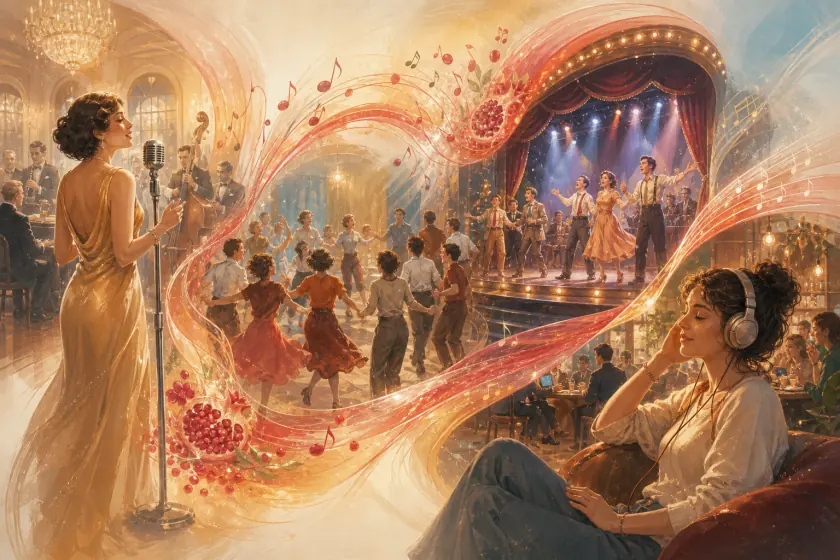
Jewish song moves through a ballroom, circle dance, musical stage and contemporary listening across generations.

Act 1: The source

A klezmer dance melody already built for motion

Der Shtiler Bulgar belonged to the klezmer dance world before the 1939 pop song. Archival documentation traces the melodic source through earlier Jewish recordings and performance.

Starting pointInstrumental klezmer dance repertoire

The source offered rhythmic energy, but no English narrative or national pop vehicle.
Jewish song moves through a ballroom, circle dance, musical stage and contemporary listening across generations.

Act 2: The bridge

Swing orchestration and an English lyric created a new song event

Ziggy Elman reshaped the material for swing. Johnny Mercer added the English lyric, while Benny Goodman, Martha Tilton and Elman's trumpet gave the song a star powered identity.

What changedGenre, lyric, featured vocalist, soloist and orchestra

Adaptation can be musical and performative as well as linguistic.
Jewish song moves through a ballroom, circle dance, musical stage and contemporary listening across generations.

Act 3: The result

The source melody entered mainstream swing memory

The Library of Congress describes And the Angels Sing as a huge hit. The outcome belongs to the complete package, not to a claim that English alone caused success.

Documented outcomeA major American swing hit in 1939

The clearest bridge joins cultural source, new authorship and a commanding performer.
EvidenceFreedman Jewish Music ArchiveLibrary of CongressInstitut Europeen des Musiques Juives

Listening on JewishHit.com

Selected recording

Playback loads only after you choose a song. Closing this player stops and unloads it.

Open this recording on YouTube